
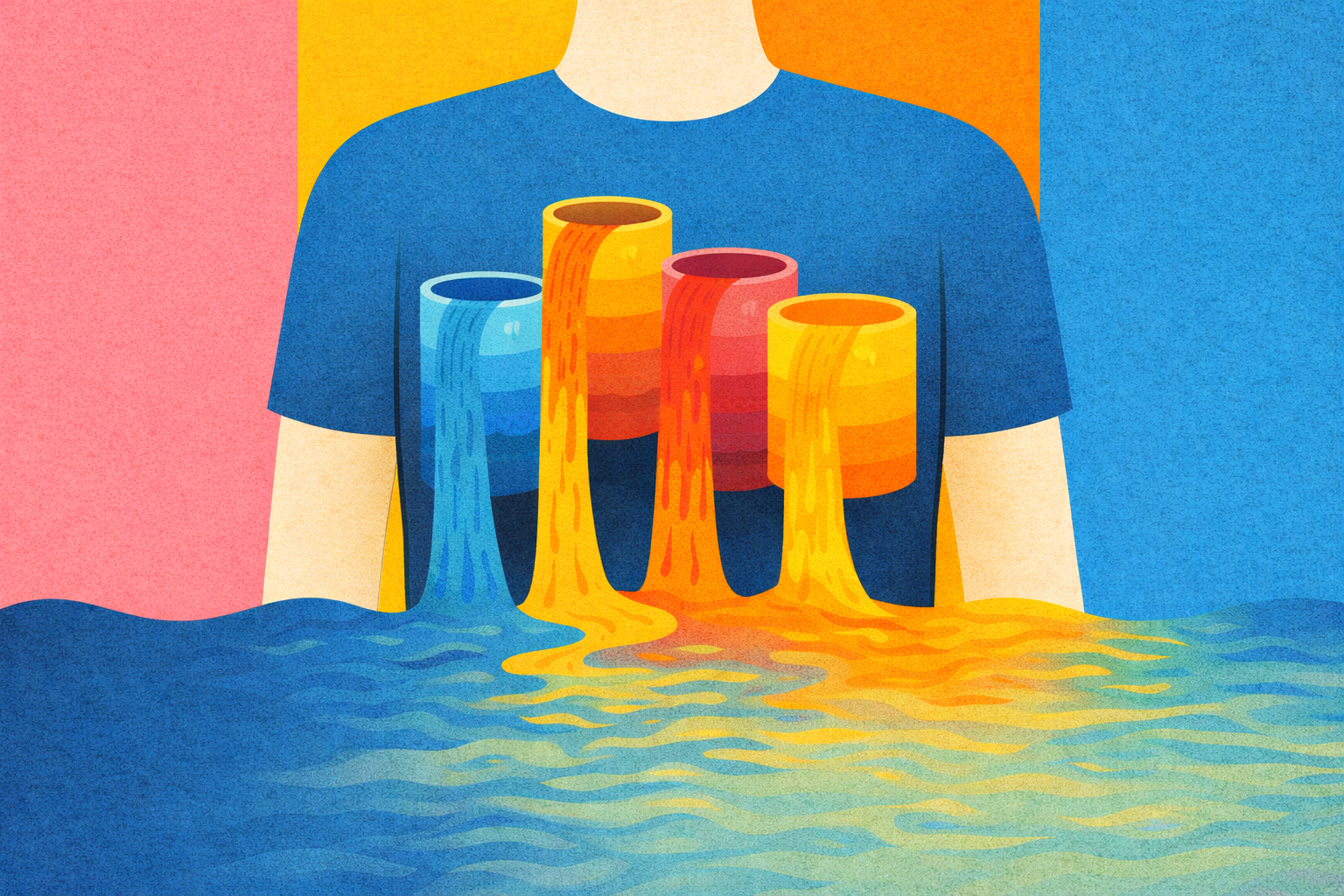
The Wells We Carry – On feelings and emotions
Inside each of us is a capacity to feel far more than we usually allow. This piece explores what can happen when we stop managing feelings and start drawing from them.
Author
John Creigan


“The attempt to escape from pain is what creates more pain.”
Almost everyone I work with will talk about anxiety at some point.
People do not always come to counselling because of anxiety, but it nearly always finds its way into the room. It shows up alongside low mood, relationship difficulties, loss, identity questions, work stress, burnout and feeling stuck. Anxiety is rarely a separate issue. More often, it is part of how someone has learned to cope with life.
That said, many people do contact me specifically because anxiety has started to take over.
They want the constant alertness to calm down, the tightness in their body to ease and the feeling of being on edge to finally lift. They want to feel more like themselves again.
That response makes complete sense. Anxiety can be exhausting. It can shrink your world, affect your relationships and make everyday situations feel heavier and more complicated than they need to be.
But through my work with people over the years, and through listening carefully to how anxiety actually shows up in real lives, I have come to see it very differently.
Not as a fault or a weakness, and not as something that needs to be removed.
Anxiety is not a random malfunction of the mind or body. It is a natural human system designed to keep us safe. It scans for danger, sharpens awareness and prepares the body to respond when something does not feel right. From a biological point of view, it is part of our survival system.
In that sense, anxiety really is a kind of internal security system.
The difficulty is not that anxiety exists. The difficulty is that sometimes it continues doing its job long after the original danger has passed.
For many people, anxiety developed in a situation where something genuinely did not feel safe.
Sometimes that involves a clear traumatic event. More often, it is harder to define. Growing up around conflict, emotional unpredictability, criticism, neglect, instability or long periods of stress can have a similar effect on the nervous system.
When we are young, we are not always able to change our environment or find protection. Anxiety may have been trying to warn us, to keep us alert or to help us cope in the only ways available at the time. If nothing changes, and there is no real opportunity for safety, the system adapts.
It becomes more sensitive, reacts more quickly and begins to generalise.
Research into anxiety and trauma shows that when someone lives under ongoing stress or threat, the body can remain in a heightened state of alert even when circumstances later improve. The nervous system does not automatically reset itself. It learns through experience.
In simple terms, the body has not yet been shown that things are different now.
Because anxiety is such a common part of human experience, most people live with it for a long time before they ever consider counselling. It often becomes noticeable only when life becomes harder or more restricted.
When anxiety feels constant or overwhelming, people naturally try to manage it. They avoid situations that feel difficult, withdraw from others or use alcohol, food, gaming, work or distractions to take the edge off. Some try to control their thoughts or push uncomfortable sensations away.
These responses are not signs of failure. They are attempts to protect themselves and find relief.
The difficulty is that avoidance tends to reduce anxiety in the short term. That short-term relief teaches the nervous system something important. It reinforces the belief that the situation really was dangerous and that escape is necessary for safety. Psychological research has consistently shown that this learning process plays a central role in how anxiety is maintained over time.
Again, the system is not broken. It is doing exactly what it believes it must do to keep you safe.
In my work, I am not interested in getting rid of anxiety.
That is usually the part people notice most.
I am interested in understanding it. That means creating enough safety and space to notice what the anxiety is responding to, how it shows up in the body and what it appears to be trying to protect.
This applies just as much when anxiety sits underneath other difficulties, as it does when anxiety feels like the main problem in someone’s life.
For many people, this is the first time anxiety has been approached with curiosity rather than fear. Contemporary therapeutic approaches increasingly support this shift in relationship with anxiety. When anxiety is constantly fought or controlled, it often becomes louder. When it is acknowledged and listened to, something begins to soften. A weight feels lifted.
Not because we agree with everything anxiety tells us, but because it no longer has to shout to be heard.
Acknowledging anxiety does not mean letting it take control of your life. The aim is to help the nervous system update its understanding of the present.
Part of that happens through the therapeutic relationship itself. Feeling taken seriously, understood and not judged can be deeply regulating for people whose anxiety developed in environments where they had to manage alone.
Part of the work involves gently reconnecting with bodily experience rather than trying to override it. And part of it involves supporting new experiences in everyday life that gradually show the body that today is not the same as then. This principle is well supported in psychological research, which shows that anxiety changes through repeated, safe experience rather than through logic alone.
This is not about forcing change or pushing people beyond what feels manageable. It is about moving at a pace that respects why anxiety developed in the first place.
Anxiety is part of being human. Almost everyone experiences it at different points in their life, especially during times of uncertainty, loss or change.
We would not want to remove it completely. We simply want it responding to what is actually happening now, rather than to situations that belong to the past.
For many people, relief comes not from eliminating anxiety, but from changing their relationship with it. From no longer being in constant conflict with a part of themselves that was trying, in its own way, to protect them.
If anxiety is shaping your life, sitting underneath other struggles, affecting your relationships or leaving you feeling stuck, overwhelmed or constantly on guard, there is space to explore that safely and at your own pace.
Sometimes the most important first step is not fixing anything.
It is being listened to.
Inside each of us is a capacity to feel far more than we usually allow. This piece explores what can happen when we stop managing feelings and start drawing from them.
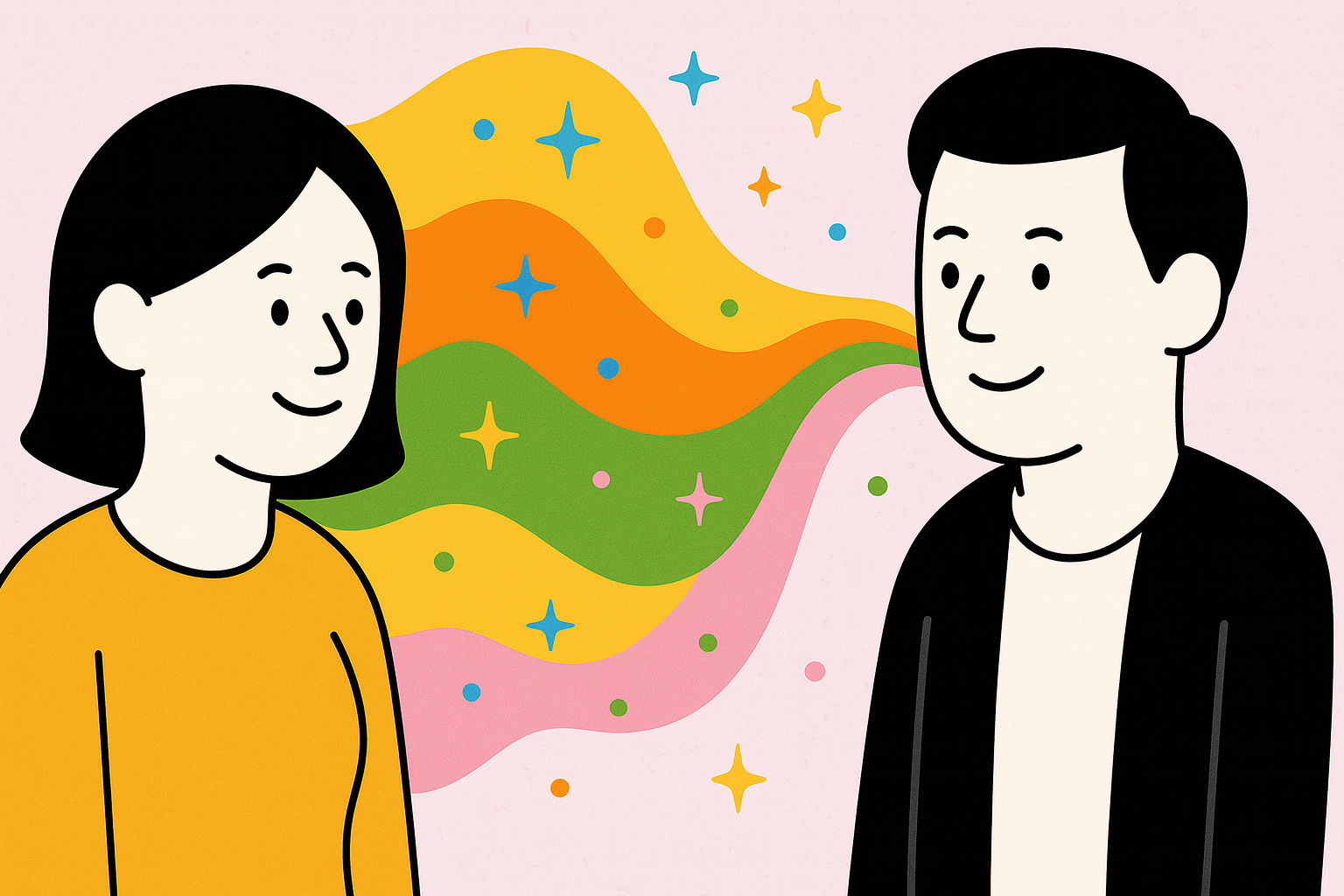
Silence can feel safer than speaking up — but unspoken feelings don’t disappear. Over time, they build distance between you and the person you love.